Quick Stats of the Project
- Category: Weekend Project
- Difficulty: 3.5/5 (Requires basic power tool use and finishing)
- Tools: Power drill, miter saw (or hand saw with a miter box), brad nailer (optional), level, caulk gun, and high-quality cabinet paint.
Standard standalone bookcases often look cluttered and leave awkward “dead space” near the ceiling or walls. By adding baseboards, crown molding, and “filler” strips, you transform basic furniture into architectural built-ins. This not only maximizes your book storage but adds significant “curb appeal” and value to your room, creating a sophisticated, library-like atmosphere for a fraction of the cost of custom cabinetry.
Step-by-Step Instructions
Step #1: Map Your Wall and Base
Measure the width of your wall and calculate how many standard bookcases will fit.
The Secret: Build a “base” using 2×4 lumber. Instead of sitting the bookcases directly on the floor, you sit them on this wooden frame. This raises them up so your floor’s baseboard can wrap around the bottom of the shelves, making them look rooted to the architecture.
Step #2: Assemble and Anchor
Assemble your bookcases according to the manufacturer’s instructions, but omit the back panels if you want the wall color to show through (this looks more high-end). Secure the bookcases to the wall studs using L-brackets. A “Weekend” project must be safe; anchoring is non-negotiable for tall shelving units to prevent tipping.
Step #3: Close the Gaps (Filler Strips)
Rarely do bookcases fit a wall perfectly. Use “filler strips”—thin pieces of MDF or pine—to bridge the gaps between the bookcases and the side walls. Use your level to ensure everything is plumb. These strips hide the “seams” and give that seamless, custom-made appearance.

Step #4: The Architectural Detail (Molding)
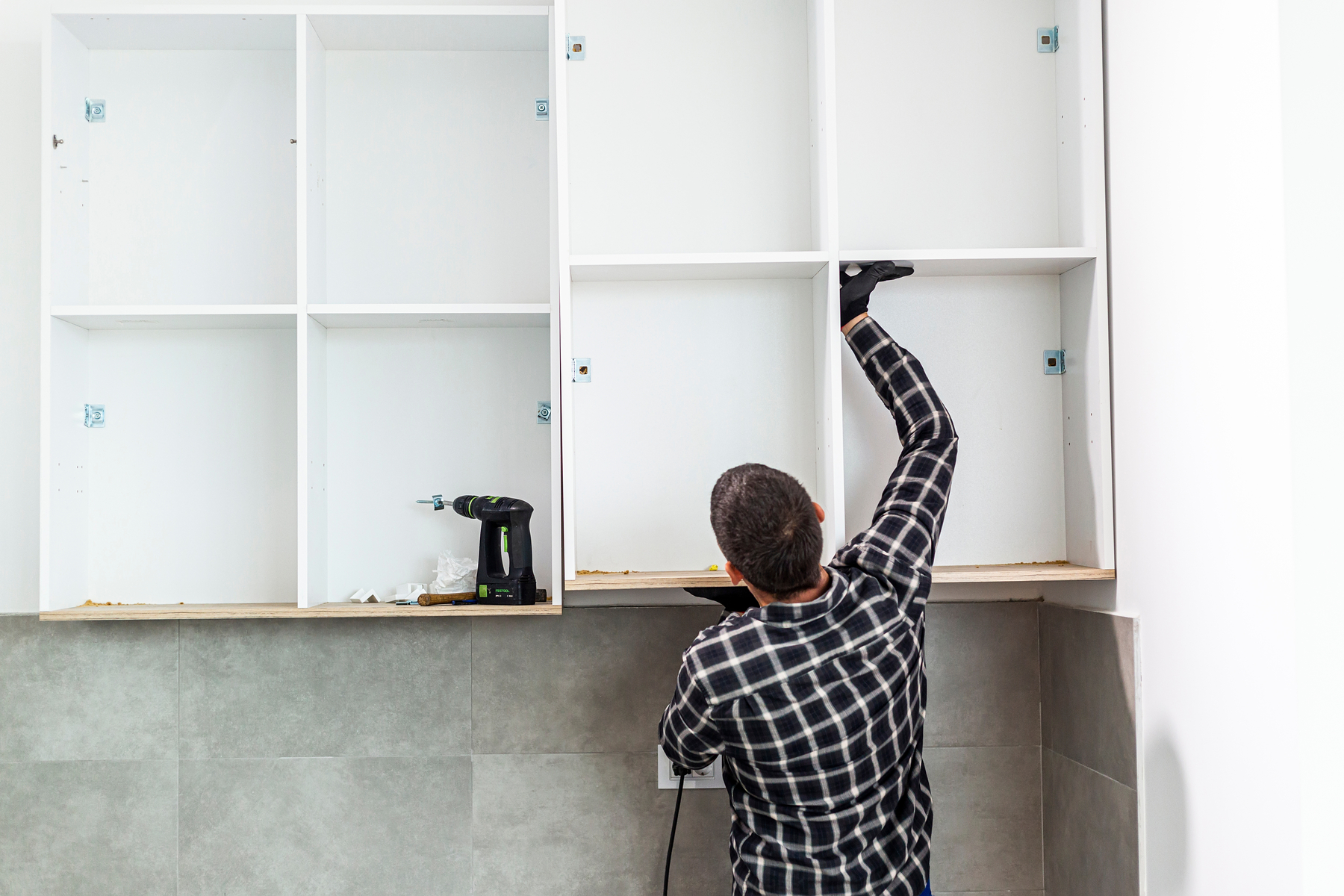
This is where the magic happens. Run a single piece of crown molding across the top of all the units and carry your floor’s baseboard across the bottom. If you have two units side-by-side, cover the vertical “seam” where they meet with a thin piece of decorative “screen mold” or trim.
Step #5: Caulk and Wood Fill
Before painting, use paintable caulk to fill every tiny gap where the wood meets the wall or where two pieces of trim meet. Use wood filler for the shelf-pin holes you aren’t using. For an Instructional Designer, think of this as “polishing the UI”—the cleaner the seams, the more professional the “user experience” of the room.
Step #6: Prime and Paint
Since most retail bookcases have a laminate finish, you must use a high-adhesion primer (like Zinsser B-I-N). Once primed, apply two coats of high-quality cabinet paint. Darker colors (Navy, Forest Green, or Charcoal) create a moody “study” vibe, while crisp white keeps the room feeling airy and modern.

Pro-Tip: The “Lighting” Level-Up
To make your DIY library look like a million dollars, install wireless, rechargeable puck lights or “picture lights” to the top molding before you paint. Painting the lights the same color as the shelves (or choosing brass for contrast) adds a layer of “accent lighting” that highlights your book collection and makes the project look professionally designed.