

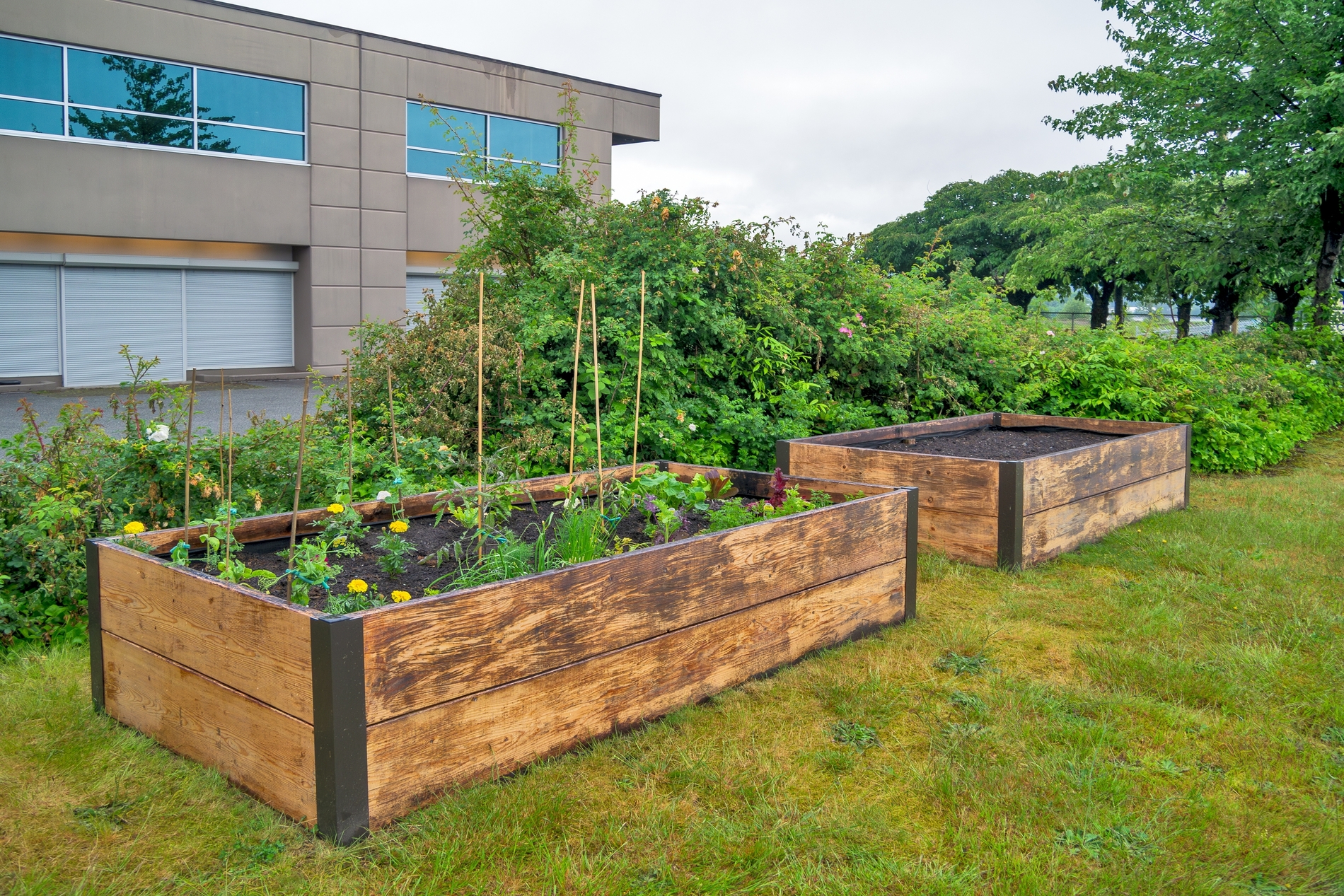
You can have fresh organic veggies and beautiful flower plants, with little effort on a free Saturday.
Here’s exactly how to build a raised timber garden bed for under $100.
What you’ll need
Before you start, get everything in one trip to the market. You’ll need:
- Four timber planks at 150×38mm (two at 120cm and two at 90cm)
- A pack of corner L-brackets
- A box of 50mm exterior screws
- A roll of weed membrane
- Compost and topsoil to fill the bed
Everything on this list will be available at any DIY or garden center, and you shouldn’t need to spend more than $100 in total.
Step 1: Lay out the frame
Before a single screw goes in, lay all four planks flat on the ground in a rectangle and check that your corners sit at a true right angle. A speed square from any hardware store makes this easy.
Step 2: Screw it together
With your corners confirmed, fix an L-bracket to each one — one on the inside face, one on the outside. Drive your screws in firmly, but don’t overtighten them into the timber or you’ll split it. Once your first layer is solid, place the second set of planks directly on top, staggering the joints slightly so they don’t line up, and repeat the bracketing process.
Step 3: Position and line it
Carry the assembled frame to wherever it’s going to live — a lawn, patio, gravel, or concrete all work fine. Once it’s in place, cut a sheet of weed membrane to fit neatly inside the base. Lay it flat and push it into the corners. The membrane stops weeds from pushing up from the ground below, and it keeps your soil from washing straight through while still allowing proper drainage. Secure the edges by folding them up slightly against the inner walls.
Step 4: Fill and plant
Tip in your topsoil and compost mix and fill the bed right to the rim. It will compact and settle after the first good watering, so be generous. Once it’s full, water it thoroughly before planting anything. Aim for a 60/40 split of topsoil to compost, as this ratio gives your plants the nutrients they need from day one.
For your first grow, keep it simple. Salad leaves, basil, mint, and courgettes are all beginner-friendly, fast-growing, and genuinely useful in the kitchen. Plant them out, water them in, and you’re finished.
Total time
Four to six hours from the first plank to the last one. Most of that is filling, not building. You don’t need prior experience, specialist tools, or a large outdoor space, just a free Saturday and a bit of motivation.