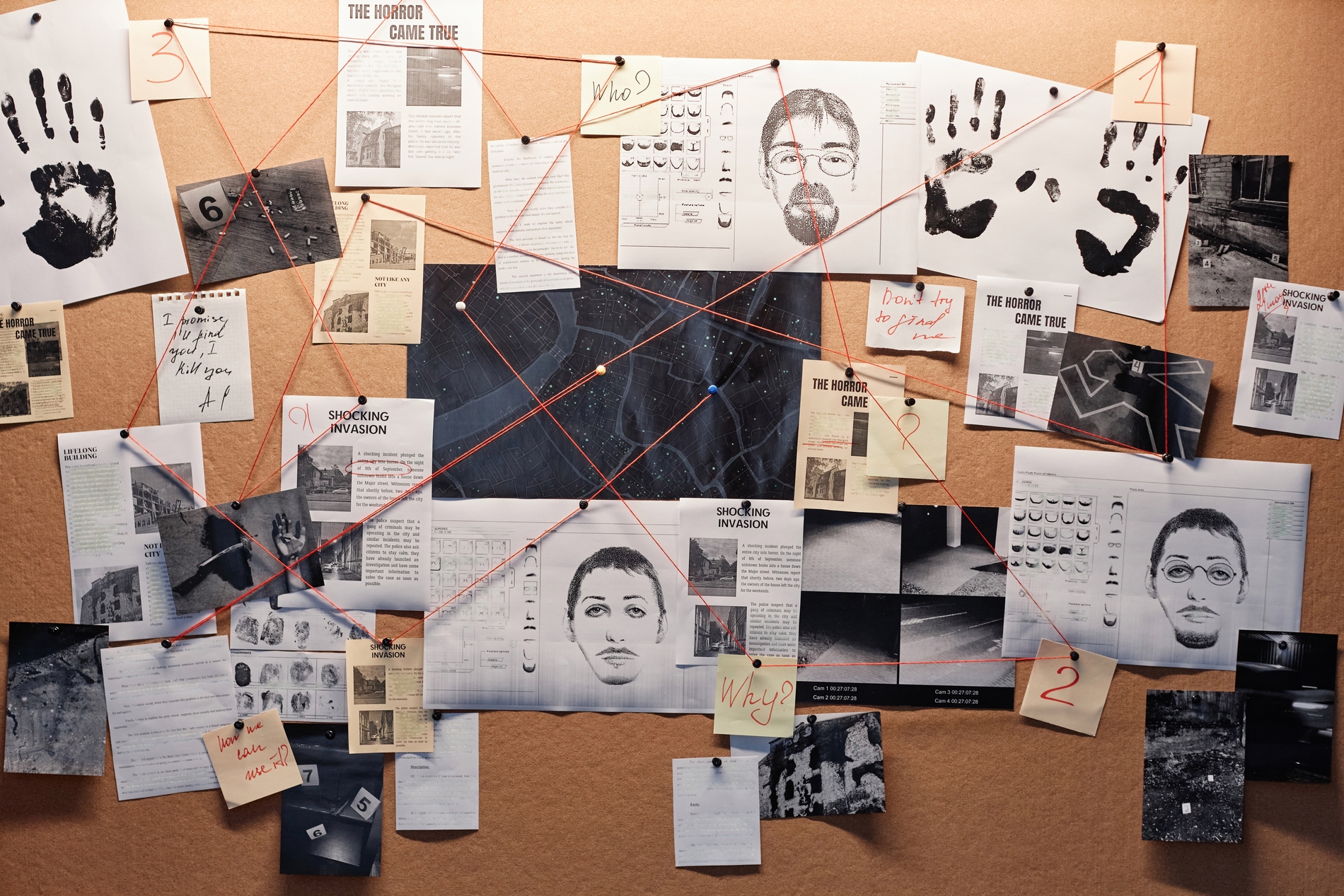
Creating a conspiracy board is fun. Best of all, you don’t need expensive materials or artistic skills. The goal is not to solve a real mystery. Instead, you’re creating a centerpiece that serves as unique wall art and instantly grabs attention.
Your guests should wonder:
- “What happened here?”
- “Is this based on a true story?”
- “What’s the connection between these photos?”
Theme Ideas
Choose one fictional storyline. Here are some examples:
- A missing explorer
- A secret organization
- An unsolved treasure hunt
- An abandoned space mission
- A mysterious billionaire
- A fictional serial thief
- A lost civilization
- An alternate history timeline
Everything on the board should support that story.
Items Needed
- Large corkboard or foam board
- Push pins
- Red string or colored thread
- Printed photographs
- Old maps
- Sticky notes
- Index cards
- Newspaper clippings (real or printed)
- Marker
- Tape
- Coffee or tea (for aging paper)
Optional
- Polaroid-style prints
- Fake evidence bags
- Boarding passes
- Stamps
- Wax seals
- QR codes leading to hidden pages or videos
Step 1: Create Your Story
Before attaching anything, write a one-paragraph backstory. Having a story makes every object feel intentional.
Example: “A scientist disappeared in 1987 after discovering a hidden city beneath the Arctic. The following documents are the remaining evidence.”
Step 2: Gather Your “Evidence”
Print or collect:
- Maps
- Portraits
- Tickets
- Newspaper headlines
- Coordinates
- Handwritten notes
- Sketches
- Symbols
Don’t worry about factual accuracy as you’re just creating atmosphere.
Step 3: Age the Documents
To make everything look authentic:
- Crumple the paper slightly
- Stain it lightly with cooled coffee or tea
- Tear a few edges
- Write notes in different handwriting styles
The imperfections add realism.
Step 4: Build the Connections
Pin everything to the board. Then connect items using a red string:
- Person → Location
- Location → Letter
- Letter → Photograph
- Photograph → Newspaper article
The more intersecting lines, the more dramatic it looks.
Step 5: Add Handwritten Notes
Use sticky notes such as:
- “Who was here?”
- “Find out what happened on June 14.”
- “This doesn’t add up.”
- “Check witness statement.”
- “Connection confirmed?”
These make the board feel like an active investigation.
Step 6: Add 3D Objects
Don’t limit yourself to paper. You may attach:
- Keys
- Coins
- Compass
- Old watch
- Postcard
- Film roll
- Small envelope
- Press badge
Mixing flat and three-dimensional items creates depth.
Make It Interactive
Hide clues throughout the board:
- QR codes
- Folded letters
- Secret envelopes
- Invisible ink messages
- Number sequences
Guests will spend 10–15 minutes trying to piece together the fictional mystery, turning your wall into both decor and entertainment.