

Quick Stats of the Project
- Category: 5-Minute Fix
- Difficulty: 1/5 (Novice)
- Tools: Screwdriver (Phillips-head or Flathead, depending on your hardware).
A loose cabinet handle is more than a minor annoyance; every time it wobbles, the screw is slowly boring a larger hole into the wood or MDF of your cabinetry. Addressing the jiggle immediately prevents permanent structural damage to the door and ensures your hardware doesn’t fall off mid-pull.
Step-by-Step Instructions
Step #1: Access the Mounting Screw
Open the cabinet door or pull out the drawer fully. Cabinet hardware is almost always secured from the rear. Locating the screw head on the interior side of the wood ensures you aren’t scratching the decorative face of the handle.
Step #2: Identify the Drive Type
Inspect the screw head to determine if you need a Phillips (cross-shaped) or Flathead (single line) screwdriver. Using the wrong tool can “strip” the screw head, making it nearly impossible to tighten or remove in the future.
Step #3: Align and Brace the Handle
Use your non-dominant hand to hold the handle on the front of the door. Ensure it is perfectly horizontal or vertical (use the edge of the door as a visual guide). Holding it firmly prevents the handle from spinning and scratching the finish as you apply torque.
Step #4: Apply Steady Torque
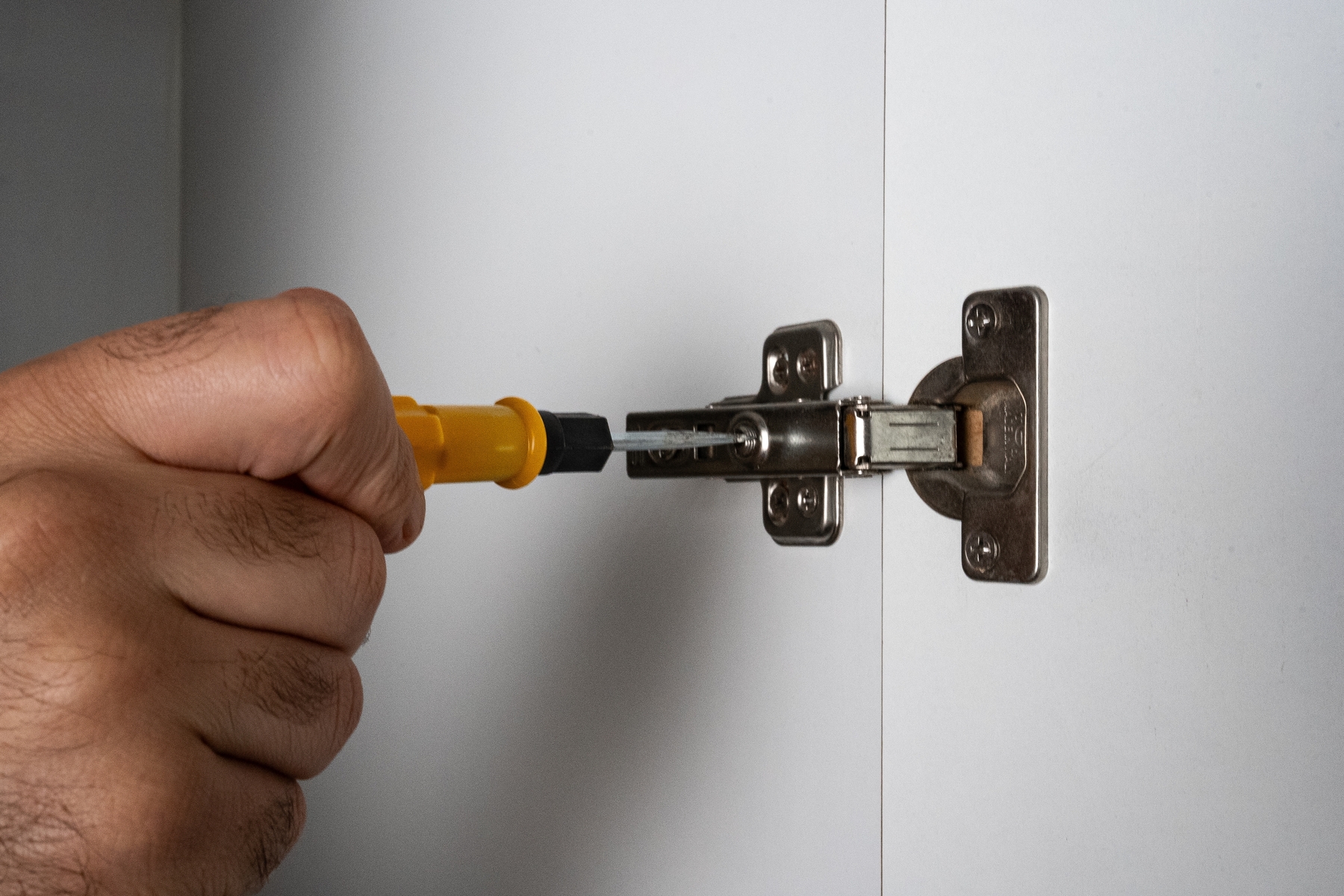
Insert the screwdriver and turn clockwise. You want the screw to be “snug”—meaning it no longer moves—but avoid over-tightening. If you feel extreme resistance, stop. Over-tightening can crack the wood or snap the head off cheaper zinc-alloy screws.
Step #5: The “Tug Test”
Close the door and give the handle a firm tug. If there is still a slight vibration or movement, open the door and give the screw one more quarter-turn. The handle should feel like an integrated part of the door.
Pro-Tip: The “Toothpick Trick”
If the screw keeps spinning and won’t tighten, the hole in the wood has become too large. Remove the screw entirely, break off the tip of a wooden toothpick, and shove it into the hole. Re-insert the screw; the toothpick provides fresh “bite” for the threads, creating a rock-solid connection without needing a larger screw.