You don’t want your mom to know you were watching Netflix late at night? Then don’t let the sound out.
Sound travels through gaps, thin walls, and hard materials. All you need to do is make some fixes, which can be done entirely in a single day. The goal isn’t a soundproof recording studio. It’s a noticeably quieter room.
Where Sound Is Actually Getting In or Out
Before buying anything, spend five minutes identifying your problem areas. The biggest culprits in most rooms are the gap under the door, uncovered windows, bare walls, bare floors, and thin curtains. Fix those surfaces and gaps first; everything else is secondary.
What You’ll Need
- Door draft stopper or self-adhesive foam seal strip
- Heavy curtains or moving blankets
- Weatherstripping tape
- Rugs and rug pads
- Adhesive foam tiles or egg crate foam
- Bookshelf and books (if you have them)
- Command strips or adhesive hooks
- Scissors and a tape measure
The Fixes, In Order of Impact
1. Seal the Door Gap

Fit a door draft stopper along the bottom. Buy the adhesive-backed rubber strip type, as it is the easiest to install and costs very little. While you’re at the door, run weatherstripping foam tape along all four edges of the door frame to close the side and top gaps. Press it firmly and let it set before closing the door.
2. Cover the Windows
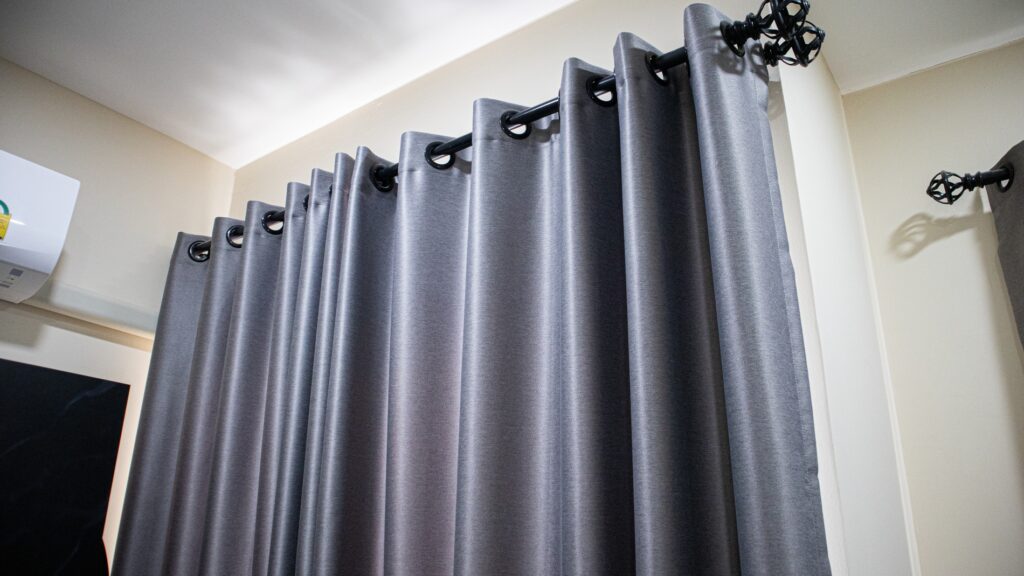
Glass is thin and transmits sound easily. Hanging heavy curtains or even moving blankets secured with hooks adds a dense layer that absorbs sound before it reaches the glass. Floor-to-ceiling coverage works better than curtains that stop at the window sill. If your windows have gaps in the frame, a strip of weatherstripping tape handles those the same way as the door.
3. Add a Rug to Hard Floors

Hard floors reflect sound around the room and let it travel through to the floor below. A large, thick rug with a rubber-backed rug pad underneath absorbs impact noise and reduces echo noticeably. The bigger the rug, the better the effect.
4. Break Up the Bare Walls
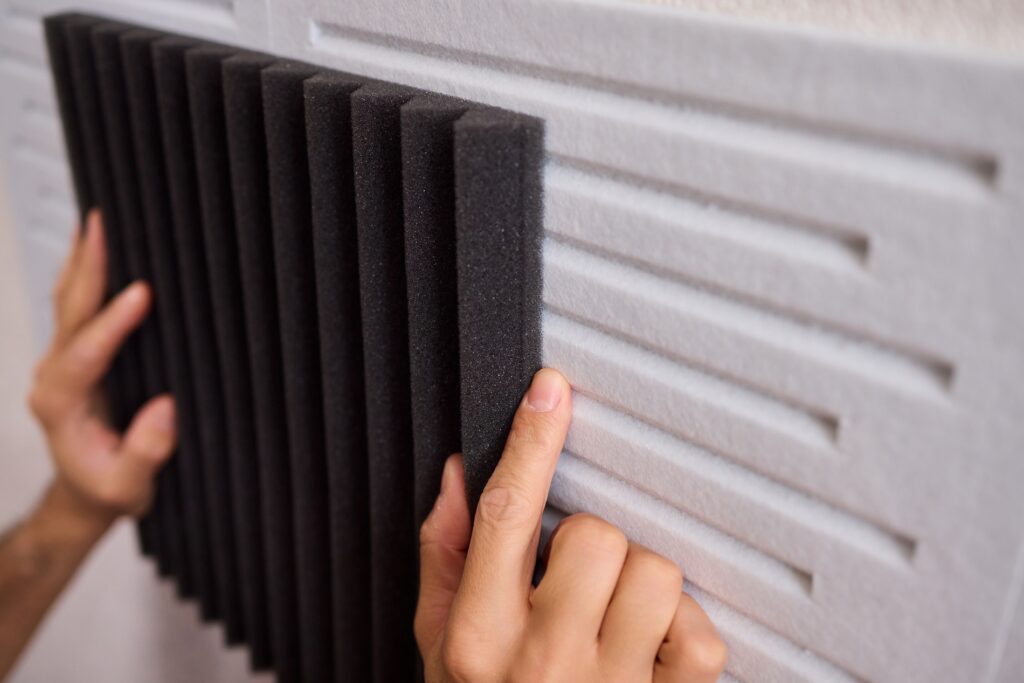
Sound bounces off flat, hard walls, amplifying echoes. Adhesive foam tiles are the cheapest fix. Place them in clusters rather than a grid for better absorption. Bookshelves filled with books work remarkably well, too. You can also use tapestries, canvas prints, and upholstered headboards.
What to Expect
By doing the above, you will get a room that feels noticeably more contained, with less echo, less bleed from outside, and less sound escaping to other rooms. Most people notice the difference immediately when they speak or play audio after completing these steps.
Do the door and windows first. Those two alone account for the majority of the improvement.